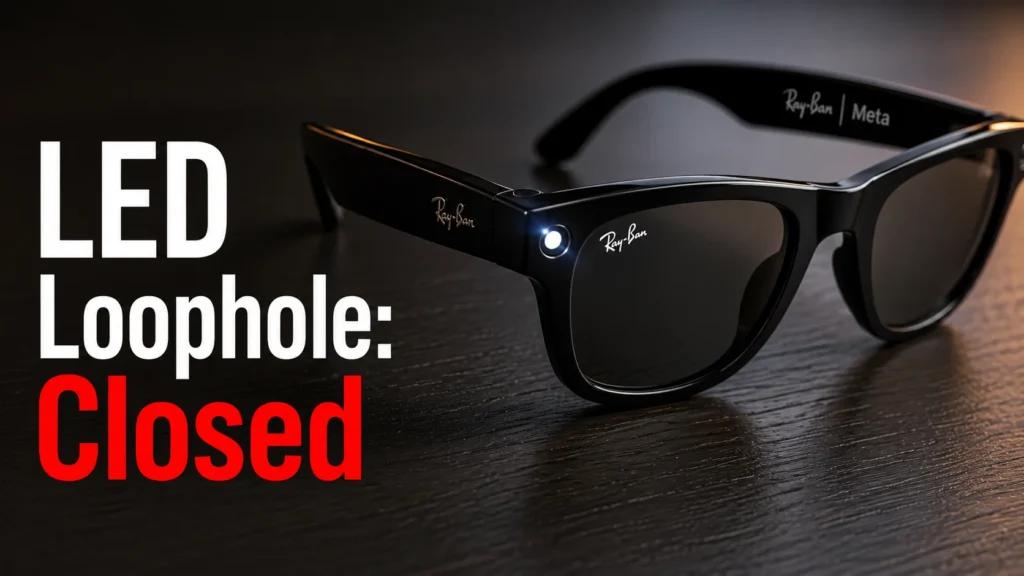
Meta is rolling out a software update that stops its smart glasses from recording if you cover the capture LED after you’ve already hit record. Until now, the glasses only checked the light when a recording started — so people covered it up seconds later and kept filming with no visible warning. The fix is live for Ray-Ban Meta, Oakley Meta, and Meta AI glasses.
What Was the Meta Smart Glasses LED Loophole?
The loophole was simple: start recording while the LED is visible, then cover it with a finger or a piece of tape. The glasses had no way to catch that, because the check only ran once, at the very start.
It’s basically the smart glasses version of an old game console trick. Some early consoles only verified a disc when you powered on, so you could boot with a legit disc, then swap in a copy once the check had already passed. Meta’s LED system worked the same way — check once, then trust the hardware for the rest of the recording.
That gap mattered more than it sounds. Meta built the capture LED specifically so bystanders would know when they’re being filmed. A light that can be switched off mid-recording defeats the entire point of putting it there.
How Were People Actually Bypassing It?
We looked through the reporting on this, and the method people were using was almost embarrassingly basic:
- Put on the glasses with the LED visible and working
- Start a video or photo capture as normal
- Cover the LED with a finger, sticker, or tape a second or two later
- Keep recording with no visible light, since the glasses never re-checked
There’s also been a small accessory market built around this exact trick — cheap covers and stick-on pieces marketed specifically to block the recording light without triggering Meta’s tamper detection. Meta says several sellers offering this kind of “LED tampering service” have shut down since the company started cracking down, though it hasn’t named who or given exact numbers.
What Does the New Update Actually Change?
Meta’s VP of Wearables, Alex Himel, announced the fix in a post on Threads. His explanation, in short: the camera now cuts off the recording automatically the moment it detects the LED has been physically covered, not just when a recording is starting.
That’s the real change here — it moved the check from “once, at the start” to “continuously, for the whole recording.” Cover the light for even a second while filming, and the glasses stop capturing.
This is Meta’s second privacy update for the capture LED in under two months. The first one dealt with people modifying the hardware to permanently disable or destroy the LED circuit. This update closes the softer, easier version of the same problem — the one that didn’t require any tools at all.
Which Meta Glasses Does This Apply To?
The update covers Meta’s whole current AI glasses lineup:
- Ray-Ban Meta (all generations with the capture LED)
- Oakley Meta
- Meta AI glasses more broadly, per Meta’s own privacy page
If your pair has a camera and a capture LED, this fix is coming to it. Meta hasn’t given a firm rollout date for every region, so don’t panic if it hasn’t hit your glasses yet — these updates tend to roll out in waves over a week or two.
Is This Enough to Actually Stop Covert Recording?
Here’s the honest answer: it closes one specific trick, and it’s a trick that genuinely deserved to be closed on day one. But it’s not the whole privacy conversation, and it would be dishonest to pretend it is.
A determined person can still find workarounds Meta hasn’t patched yet — that’s just the reality of hardware-based privacy indicators. And covering the LED is really the lazy version of covert recording anyway. Anyone serious about filming someone without consent was never going to be stopped by a blinking light, they were going to use a regular phone held low, which nobody questions in public the way they’d question glasses.
What this update does well is remove the casual, low-effort version of the problem — the accidental brush of a finger over the LED, or the person who deliberately covers it after starting because they figured nobody would notice. That’s a real improvement, even if it’s not a complete fix.
There’s also a separate wrinkle worth mentioning: reporting from Wired earlier this year found code inside Meta’s smart glasses app pointing to an unreleased facial recognition feature, reportedly tied to a government contractor project. That’s a different privacy issue from the LED loophole, but it’s part of why trust around these glasses is shakier than Meta would probably like.
Meta’s Privacy Fixes on Smart Glasses: A Quick Timeline
| Update | What It Changed | Status |
|---|---|---|
| Original design (launch) | Camera won’t start recording if the LED is already covered when you hit record | Live since launch |
| Mandatory firmware update, earlier 2026 | Hardware-level tamper detection — physically destroying or removing the LED disables the camera until repaired | Rolled out earlier this year |
| Latest update, August 2026 | Camera stops recording mid-capture if the LED is covered after filming starts | Rolling out now |
What Should You Do If You Own a Pair?
You don’t need to do much. This is a backend software fix, not a setting you toggle.
- Keep your Meta AI companion app updated so the firmware push reaches your glasses
- If your camera suddenly stops mid-recording, check whether your hand, hair, or a case is brushing the LED — that’s likely the new detection kicking in, not a hardware fault
- If you bought a third-party LED cover or tape specifically to hide the light, know that it’s very likely to stop working, or already has
For everyday users who aren’t trying to record anyone secretly, this changes basically nothing about how you use your glasses day to day.
Bottom Line
Meta closed a loophole that honestly should never have existed in the first place — checking a privacy light once and then ignoring it for the rest of a recording was always going to get exploited. This update fixes that specific gap, and Meta says it’s already seeing some of the accessory sellers built around it disappear.
It’s not a total solution to covert recording with wearables, and it was never going to be. But if you’re deciding whether to trust the light on a pair of Meta glasses pointed at you, it’s a little more trustworthy today than it was last week. If you own a pair, update the app, and if you’re on the other side of the lens, that white light staying lit is now a slightly better signal than it used to be.
FAQ SECTION:
Q1: What is the Meta smart glasses LED loophole? A1: It was a gap in Meta’s privacy light system where the glasses only checked if the capture LED was covered at the moment a recording started. People could start recording with the light visible, then cover it seconds later, and the glasses would keep filming with no active warning light.
Q2: Which Meta glasses does the LED fix apply to? A2: The update applies to Ray-Ban Meta, Oakley Meta, and Meta’s broader AI glasses lineup — any model with a camera and capture LED. Meta is rolling it out in stages, so it may not reach every region or device on the same day.
Q3: Does covering the LED before I start recording still block the camera? A3: Yes. That protection has existed since launch and hasn’t changed. What’s new is that the camera now also stops if you cover the LED after a recording has already begun, closing the loophole people were using to bypass the original check.
Q4: Can I still buy a cover or tape to hide the recording light? A4: You can still find these accessories being sold, but Meta says the update is designed to make them ineffective, since the camera now shuts off the moment it detects the LED is blocked, tampered with, or destroyed — during recording, not just before it.
Q5: How do I make sure I get the update? A5: Keep the Meta AI companion app updated on your phone, since that’s how firmware updates reach your glasses. There’s no separate setting to turn on — it applies automatically once your specific device receives the rollout.
Q6: Is this update enough to stop people from recording others without consent? A6: It stops one specific, low-effort trick, not covert recording in general. Anyone determined to film someone secretly still has options a light can’t fully block, like a phone. It’s a real improvement for casual misuse, not a complete privacy fix.